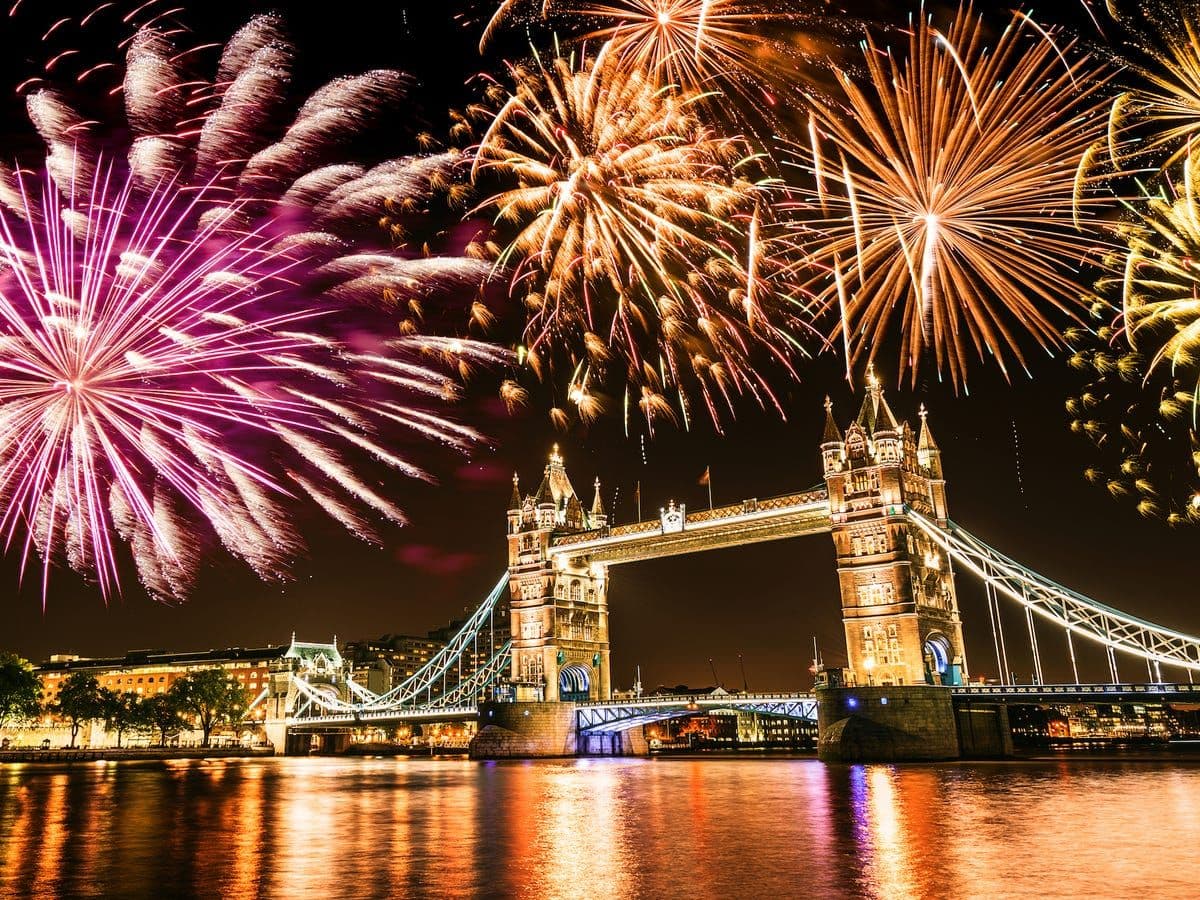
Firework displays can leave behind more than smoke. When shells burst apart, fragments of their casings can fall into rivers, lakesand coastal waters, where recovering them is difficult. Many large displays are held over water, including Sydney Harbour and Hong Kong’s Victoria Harbour.
In Japan, one manufacturer has developed a firework casing designed to dissolve after exposure to rain. The innovation offers a potential way to reduce persistent casing debris, but it raises a bigger question, does a material breaking down necessarily mean it causes less environmental harm?
Kakinoki Fireworks Industry, working with Ryukoku University, developed the casing using water-soluble resin. During a test in March 2025 at a university ground, most fragments dissolved within three to four days after rain. Full-scale production and sales began at the end of that year.
From 15 October, UK registered sellers can sell fireworks to the public ahead of Bonfire Night and Diwali, so the question is timely.
When breaking down isn’t enough
Kakinoki’s own history illustrates the challenge. According to a company account published by Shiga Prefecture in July 2020, its earlier biodegradable-plastic shell broke down into mud within about four hours in rivers, Lake Biwa or rain. Yet the company reported withdrawing the product around 2012 after discovering that a non-water-soluble resin in part of the material left microplastics.
The company describes its newer water-soluble casing as leaving no microplastics. The resin is also used in agricultural seed coatings and soil improvers and has been described as harmless to organisms. However, its use in other products and the fact that it dissolves do not, on their own, establish its environmental safety in natural waters. The earlier product does not prove that the new casing has the same problem, but it shows why the dissolved material needs to be tested.
Dissolving doesn’t address everything else
A 2022 study found that microplastic concentrations in the Thames rose from 44.3 to 510 particles per litre within 24 hours of London’s 2020 New Year’s Eve display. However, the researchers could not establish that the display caused the rise, and around 99% of the particles counted were fibres. The study is therefore a pointer for further research rather than evidence about casings.
Fireworks can also introduce chemicals into water. A 2007 study of a municipal lake in Oklahoma recorded perchlorate concentrations of up to 44.2 micrograms per litre after a display. Perchlorate can interfere with thyroid function. A water-soluble casing would not, by itself, stop these chemicals entering the environment, nor eliminate other plastic parts. In Kiel, GEOMAR researchers reported plastic rocket caps from private fireworks breaking into fragments a few millimetres wide within days.
What would count as a genuine improvement?
Independent testing would need to establish whether the dissolved material leaves persistent residues in freshwater and marine environments, how it behaves in different water conditions, and whether displays using it leave less debris, ideally shown by sampling before and after real displays. For UK buyers, category 4 fireworks are reserved for licensed professionals, so a display casing would not reach garden fireworks.
Water-soluble casings may offer a practical way to reduce persistent shell debris. The relevant question is not simply whether the casing dissolves, but whether it leaves less environmental harm behind.
Until the dissolved material is tested, a shell that disappears is not necessarily a shell that is clean.
References
- GOV.UK (2026), ‘Fireworks: the law’. Available at: https://www.gov.uk/fireworks-the-law
- Ryukoku University (2026), press release on water-soluble firework shell casings, 24 April 2026. Available at: https://digitalpr.jp/r/133804.
- Shiga Prefecture, Lake Biwa Environment Department (2020), ‘Plastic waste reduction initiatives vol. 6’ (プラスチックごみ削減の取組紹介 vol.6), July 2020, featuring Kakinoki Fireworks Industry.
- Devereux, R., Westhead, E.K., Jayaratne, R. and Newport, D. (2022), ‘Microplastic abundance in the Thames River during the New Year period’, Marine Pollution Bulletin, 177, 113534. doi:10.1016/j.marpolbul.2022.113534.
- Wilkin, R.T., Fine, D.D. and Burnett, N.G. (2007), ‘Perchlorate behavior in a municipal lake following fireworks displays’, Environmental Science & Technology, 41(11), pp. 3966–3971. doi:10.1021/es0700698.
- Leung, A.M., He, X., Pearce, E.N. and Braverman, L.E. (2013), ‘Perchlorate Concentrations in Boston’s Charles River After the July 4th Fireworks Spectacular’ (letter), Thyroid, 23(3), pp. 378–379. doi:10.1089/thy.2012.0410.
- GEOMAR Helmholtz Centre for Ocean Research Kiel (2020), ‘Rainwater flushes microplastics into the Kiel Fjord’, press release, 28 May 2020.