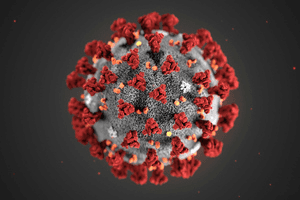
Antimicrobial resistance (AMR) is becoming an increasingly serious threat to global healthcare. Resistance is not limited to bacteria: AMR can affect bacteria, viruses, fungi and parasites, although antibiotics specifically target bacterial infections. As resistance increases, the need for new antimicrobial treatments becomes more urgent (Salam et al.).
Artificial intelligence (AI) appears to offer part of the solution. Its ability to analyse large datasets and identify patterns could help researchers discover promising drug candidates more efficiently. AI is already being investigated across numerous healthcare fields. A systematic review identified AI-related challenges across 24 healthcare areas, while highlighting technical limitations, technology adoption, reliability and validity as major barriers. This suggests that AI has considerable potential, but its application in healthcare still requires rigorous validation and effective implementation (Serrano et al.).
In my view, this is the most important part of the issue because it shows that scientific progress and commercial incentives do not always move in the same direction. I find it particularly interesting that AI could make discovery more efficient, yet the financial problem could still prevent promising antibiotics from reaching patients.
The key question, therefore, is not simply whether AI can help discover new antibiotics. It is whether pharmaceutical companies have a sufficient financial incentive to invest in doing so.
The economics of antibiotic development are particularly challenging. Developing a new medicine can require substantial research, development and clinical-testing expenditure, with no guarantee of successful regulatory approval or commercial return (Ramagopalan et al.). Antibiotics face an additional problem: unlike medicines for chronic diseases, they are generally used for relatively short periods.
Personally, I think this is what makes antibiotic development different from many other areas of pharmaceutical investment. It seems counterintuitive to develop a treatment that is most valuable when it is kept in reserve, but from a public-health perspective that restraint is exactly what is needed.
More importantly, the most valuable new antibiotics may need to be deliberately restricted. Healthcare providers have an incentive to preserve new treatments for cases where existing antibiotics are ineffective, because excessive use accelerates resistance. From a public-health perspective, this is essential. From a commercial perspective, however, it creates a contradiction. Pharmaceutical companies are expected to invest heavily in developing new products that society simultaneously wants to use as little as possible (Bill Coyle).
The UK Government and NHS England have recognised this as a market failure. Their antimicrobial subscription model attempts to address the problem by separating company revenue from the volume of antibiotics prescribed. Under the model, companies can receive a fixed annual payment based primarily on the value and availability of an antimicrobial rather than the number of doses sold (Leonard et al.).
This approach could also make investment in AI-driven antibiotic discovery more attractive. AI may reduce aspects of research time and improve the identification of potential candidates, but it cannot eliminate the costs and risks associated with laboratory testing, clinical trials, manufacturing and regulatory approval. If the eventual antibiotic still generates limited sales because of responsible stewardship, the underlying commercial problem remains.
From an investment perspective, governments therefore have an important role to play. Subscription contracts, guaranteed procurement, milestone funding and public-private research partnerships could reduce the financial risk faced by pharmaceutical companies while maintaining controls on antibiotic use (Anderson et al.). The NHS has already demonstrated that alternative payment models are possible, including fixed annual payments for selected antibiotics.
My overall view is that AI should be seen as an enabler rather than the complete solution. The technology could help researchers work faster and make better use of data, but governments, healthcare systems and pharmaceutical companies still need to create a model that makes antibiotic development financially sustainable. To me, this balance between innovation, responsible use and commercial reward is the central challenge.
Ultimately, AI may provide pharmaceutical companies with a powerful tool for accelerating antibiotic discovery, but technology alone will not solve the industry's investment problem. The fundamental issue is the mismatch between the social value of new antibiotics and the financial return generated by selling them. If governments can close that gap through targeted incentives and alternative purchasing models, AI could become part of a broader strategy for rebuilding the antibiotic pipeline. Without such changes, society risks developing increasingly sophisticated tools for drug discovery while lacking the commercial incentives needed to turn those discoveries into widely available treatments.
References
- Salam, Md Abdus, et al. “Antimicrobial Resistance: A Growing Serious Threat for Global Public Health.” Healthcare, vol. 11, no. 13, 5 July 2023, https://pmc.ncbi.nlm.nih.gov/articles/PMC10340576/, 10.3390/healthcare11131946. Accessed 23 Sept. 2026.
- Serrano, Dolores R., et al. “Artificial Intelligence (AI) Applications in Drug Discovery and Drug Delivery: Revolutionizing Personalized Medicine.” Pharmaceutics, vol. 16, no. 10, 14 Oct. 2024, p. 1328, https://mdpi-res.com/pharmaceutics/pharmaceutics-16-01328/article_deploy/pharmaceutics-16-01328.pdf?version=1728891790, 10.3390/pharmaceutics16101328. Accessed 23 Sept. 2026.
- Ramagopalan, Sreeram V, et al. “The Need to Consider Market Access for Pharmaceutical Investment Decisions: A Primer.” Journal of Comparative Effectiveness Research, 4 Apr. 2025, https://pmc.ncbi.nlm.nih.gov/articles/PMC12007478/, 10.57264/cer-2025-0036. Accessed 23 Sept. 2026.
- Bill Coyle. “Breakthroughs or Bottlenecks? Pharma Industry Outlook, Trends and Strategies For 2025.” @Zsassociates, ZS, 10 Jan. 2025, https://www.zs.com/insights/pharmaceutical-trends-2025-outlook-ai-supplychain-and-beyond. Accessed 23 Sept. 2026.
- Leonard, Colm, et al. “Can the UK “Netflix” Payment Model Boost the Antibacterial Pipeline?” Applied Health Economics and Health Policy, vol. 21, no. 3, 17 Jan. 2023, 10.1007/s40258-022-00786-1.
- Anderson, Michael, et al. “Challenges and Opportunities for Incentivising Antibiotic Research and Development in Europe.” The Lancet Regional Health, vol. 33, 1 Oct. 2023, pp. 100705–100705, 10.1016/j.lanepe.2023.100705.