Commercial real estate rests on two assumptions: land has value because of where it is, and buildings have value because someone else could use them if the current tenant leaves.
Data centres break both.
What you are actually buying
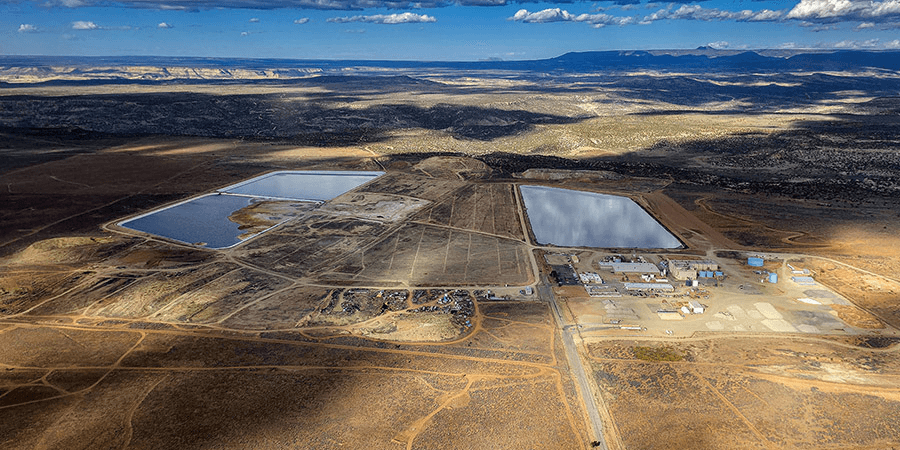
In Northern Virginia, data centre land sold for $3.5m to $4m an acre in 2026. In the UK, power-ready industrial land has reached £15m an acre.
The same land without a grid connection is worth a fraction of that. Buyers are not paying for acreage or location, but paying for a queue position with a utility.
The market has moved accordingly. US data centre land deals hit $3.3bn in the first quarter of 2026, up 141% year on year, and accounted for around 30% of all development land spending, up from 19% a year earlier. Transactions actually fell over that period, from 20 to 16, yet with fewer deals, there is far more money.
The scarcity is in the connection, not the land. In the UK, NESO's grid connection backlog runs 12 to 15 years against 119 data centre projects in planning and 50 GW of queued requests. In the US, Berkeley Lab's latest Queued Up report puts the median time from interconnection request to commercial operation at more than five years for generation projects built in 2025, against under two years in the early 2000s. Data centres connect as load rather than generation, so the queues differ, but the same transmission constraints bind both, and new data centre load frequently requires new generation to serve it.
The premium therefore rests on one condition: that connecting to the grid keeps taking longer than building the facility. If grid delivery speeds up, the premium compresses.
What you are left holding
The exit is the harder problem, and it gets less attention.
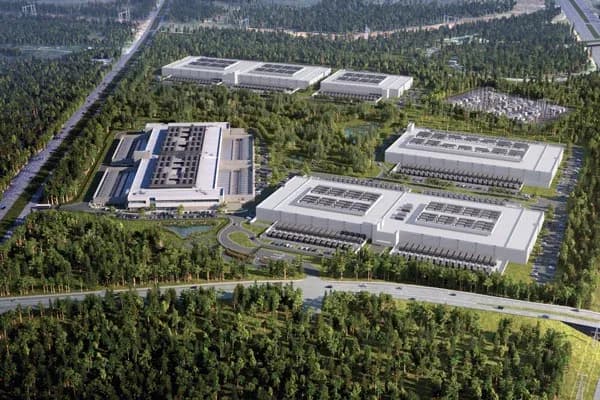
A warehouse can become a logistics facility and an office can be converted. A purpose-built hyperscale data centre has almost no alternative use. Rating agencies treat this as a distinct risk category, applying conservative terminal cap rates and stress-testing prolonged vacancy specifically because recovery value cannot be assumed.
Technology makes it worse. Average rack density across all data centres reached 27 kW in 2026, up from 16 kW a year earlier. NVIDIA's current flagship GB200 NVL72 draws around 132 kW and its 800 VDC architecture targets 1 MW racks from 2027. A building specified for today's frontier may need a second construction project before it can be re-leased or refinanced at all, and a retrofit that is technically possible can still fail a bondholder if it takes too long or costs too much.
The arithmetic is unforgiving as an investor acquiring a data centre at a 6% initial yield faces a sub-4% IRR if residual value turns out to be 30% or less of purchase price. The entry yield looks like real estate but the return depends on a terminal value assumption that real estate comparables cannot support.
The constraint
Tier 1 markets with dense connectivity and mature hyperscale demand support higher residual assumptions and better debt pricing than secondary markets. Listed platforms such as Equinix and Digital Realty hold diversified portfolios serving thousands of customers rather than one hyperscale tenant, which materially reduces re-leasing risk.
The market is also adapting. Some recent leases reportedly include residual value guarantees if the tenant exits early, shifting risk back to the occupier. Those protections are deal-specific and not yet standard.
What would settle it
If grid connection times fall, powered land stops being scarce and the front-end premium goes. If rack density keeps climbing while buildings stay fixed, the back-end residual erodes.
An asset class can survive one of those but the question is what happens to anything underwritten on 2026 pricing if both arrive at once.
References
CRE Daily, 'Data Center Land Deals Surge 141%, Reshaping U.S. Development Market', 1 June 2026, citing Avison Young. https://www.credaily.com/newsletters/national/issue/data-center-land-deals-surge-141-reshaping-u-s-development-market/
Metro Colo Advisory, 'Powered Land for Data Centers', citing NAHB and public records. https://metrocoloadvisory.com/powered-land/
Resultsense via Reuters, 'UK powered land valuations surge as AI data-centre queue balloons', 24 April 2026. https://www.resultsense.com/news/2026-04-24-uk-powered-land-data-centre-gold-rush/
Lawrence Berkeley National Laboratory and GridTracker, Queued Up: 2026 Edition, June 2026. https://emp.lbl.gov/queues
AFCOM, State of the Data Center Report 2026
NVIDIA Technical Blog, '800 VDC architecture for 1 MW racks', 20 May 2025
CREFC, Data Center E-Primer. https://www.crefc.org/common/Uploaded%20files/Learn/DataCenters-Eprimer_Final.pdf
Colantonio, M., 'Listed Real Assets: The discipline of AI exposure', Livewire Markets. https://www.livewiremarkets.com/wires/listed-real-assets-the-discipline-of-ai-exposure
Disclaimer
This piece is published by Howden Research for informational and educational purposes only. It is not investment advice, a personal recommendation, or an investment recommendation within the meaning of UK market abuse rules, and it is not an offer or solicitation to buy or sell any security. Howden Research is not authorised or regulated by the Financial Conduct Authority. Views expressed are those of the author at the date of publication and are subject to change. Contributors may hold positions in the securities or instruments discussed. The value of investments can fall as well as rise. Anyone considering an investment decision should seek advice from an appropriately authorised professional.