The Global Impact Investing Network sized the market at $1.76 trillion this week, up 12% from $1.57 trillion in 2024. Compound annual growth fell to 6% between 2024 and 2026, against 21% between 2019 and 2024.
The GIIN’s own framing is not promotional. Chief operating officer Dean Hand and director of knowledge and practice Kate Walsh write that “the next chapter cannot simply be about the market’s growth.”
The slowdown is usually read as a sustainability backlash but the composition of the market suggests something more specific.
Where the money sits
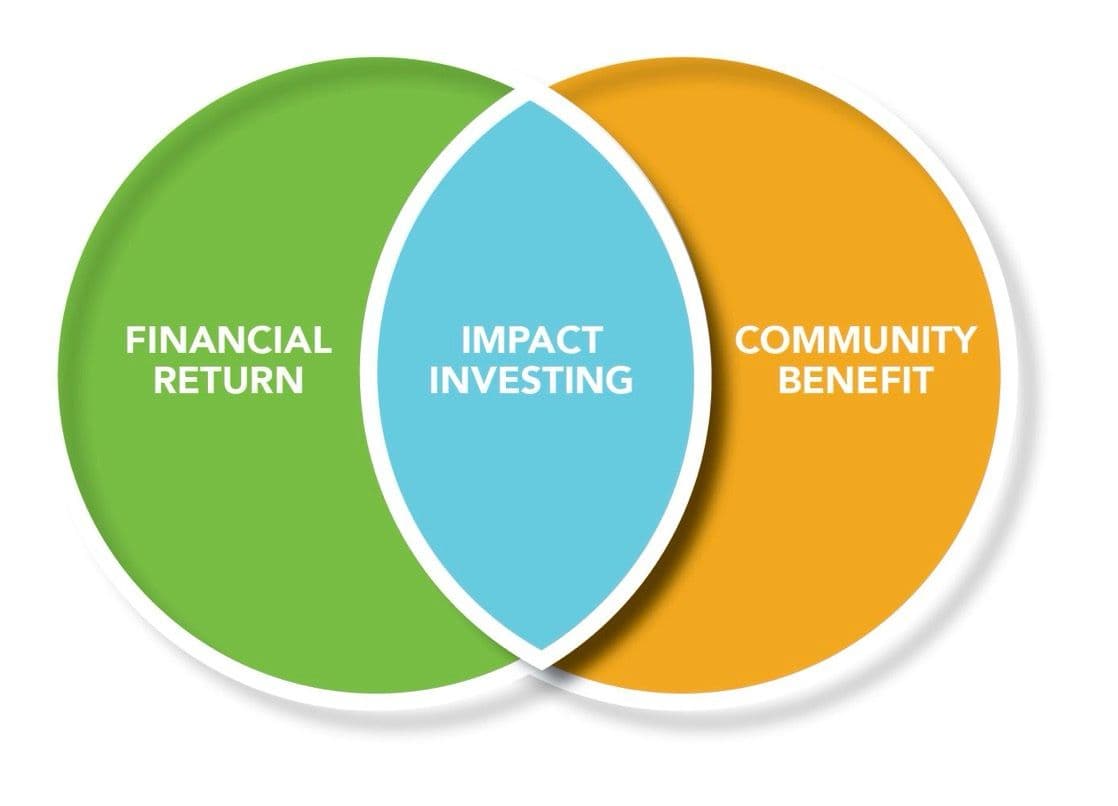
Impact investing rests on three claims: investor intent, investor contribution, and measurement. The second, usually called additionality, requires value that would not have existed without the investment. It is strongest where capital is scarce and the enterprise is young, and it weakens steadily as companies mature and alternative funding becomes available.
The allocation data runs directly against that gradient with seed and startup companies being targeted by 36% of investors but receiving 2% of impact assets. Venture stage draws 53% of investors and 10% of assets and growth stage takes 25%. Mature private companies, targeted by barely a third of investors, absorb 28%, because ticket sizes are larger and cost per dollar deployed is lower.Early stage, where the contribution claim is cleanest, accounts for 12% of the market.
The investor base shows the same pattern. Firms managing over $500 million are 28% of survey respondents and hold 93% of total impact assets. Firms under $100 million are 40% of respondents and hold 1%. The report describes the difference in behaviour plainly: large investors target “more mature companies, including those publicly traded,” while small investors fund “businesses at early stages of their development.”
The market scaled by moving toward assets where its defining principle applies least.
The deployment data says the same thing
Among investors who responded to the GIIN’s survey in consecutive years, capital invested in 2024 fell 30% against the prior year and researchers described it as a possible capital pullback.
Those investors had forecast a downturn themselves with the drop coming in 18% larger than they expected, and deal count 10% below forecast. Capital invested totalled $49.8 billion in 2024 against $58.6 billion expected for 2025.
Assets under management rose while deployment fell short of plan. Growth is coming from appreciation and reclassification rather than from new capital reaching new enterprises.
The definition already moved
The GIIN now defines impact investments as using capital “along with engagement or investment terms to positively influence targeted impact results.”
Engagement lets an investor in mature or listed companies claim contribution through stewardship rather than funding. That is defensible, but it is a weaker claim than the one the field was built on, and considerably harder to falsify.
The constraint
The GIIN’s reading is that this reflects maturity: “Rather than signaling a retreat, this pattern may reflect a market moving from rapid early adoption into a more measured, sustained growth phase.” Markets do decelerate as they scale.
Concentration is not automatically a failure either. Per-deal costs fall as tickets rise, so large investors allocating to mature assets may simply be efficient, and efficiency is not the enemy of impact.
Investors themselves report satisfaction as over 70% are content with financial performance and nine in ten with impact results.
What to watch
Deployment rather than assets under management, and stage mix rather than headline growth.
If the 2028 sizing shows AUM rising while capital invested stays below forecast and the early-stage share stays near 12%, the market will have grown without funding much that would not otherwise have been funded.
A number that rises because the measurement changed is not the same as a market that grew.
References
- Global Impact Investing Network, State and Size of the Impact Investing Market 2026, Walsh, K., Altshuler, M., Imessaoudene, Z. and Tate, J., 28 October 2026. https://thegiin.org/publication/research/state-of-the-market-2026/
- Global Impact Investing Network, State of the Market 2025: Trends, Performance and Allocations, October 2025. https://s3.amazonaws.com/giin-web-assets/giin/assets/publication/giin-stateofthemarket2025.pdf
- Pioneers Post, ‘Impact investments worldwide hit US$1.76tn as growth slows’, Joffre, L., 28 October 2026. https://www.pioneerspost.com/news-views/20261028/impact-investments-worldwide-hit-us176tn-growth-slows-giin-report
- Pioneers Post, ‘Global volume of capital invested in impact deals in 2024 falls by 30% compared with previous year’, Joffre, L., 9 October 2025. https://www.pioneerspost.com/news-views/20251009/global-volume-of-capital-invested-impact-deals-2024-falls-30-compared-previous
- Impact Investor, ‘GIIN report: Impact investing surges despite global headwinds’, October 2025. https://impact-investor.com/giin-report-impact-investing-surges-despite-global-headwinds/
Disclaimer
This piece is published by Howden Research for informational and educational purposes only. It is not investment advice, a personal recommendation, or an investment recommendation within the meaning of UK market abuse rules, and it is not an offer or solicitation to buy or sell any security. Howden Research is not authorised or regulated by the Financial Conduct Authority. Views expressed are those of the author at the date of publication and are subject to change. Contributors may hold positions in the securities or instruments discussed. The value of investments can fall as well as rise. Anyone considering an investment decision should seek advice from an appropriately authorised professional.