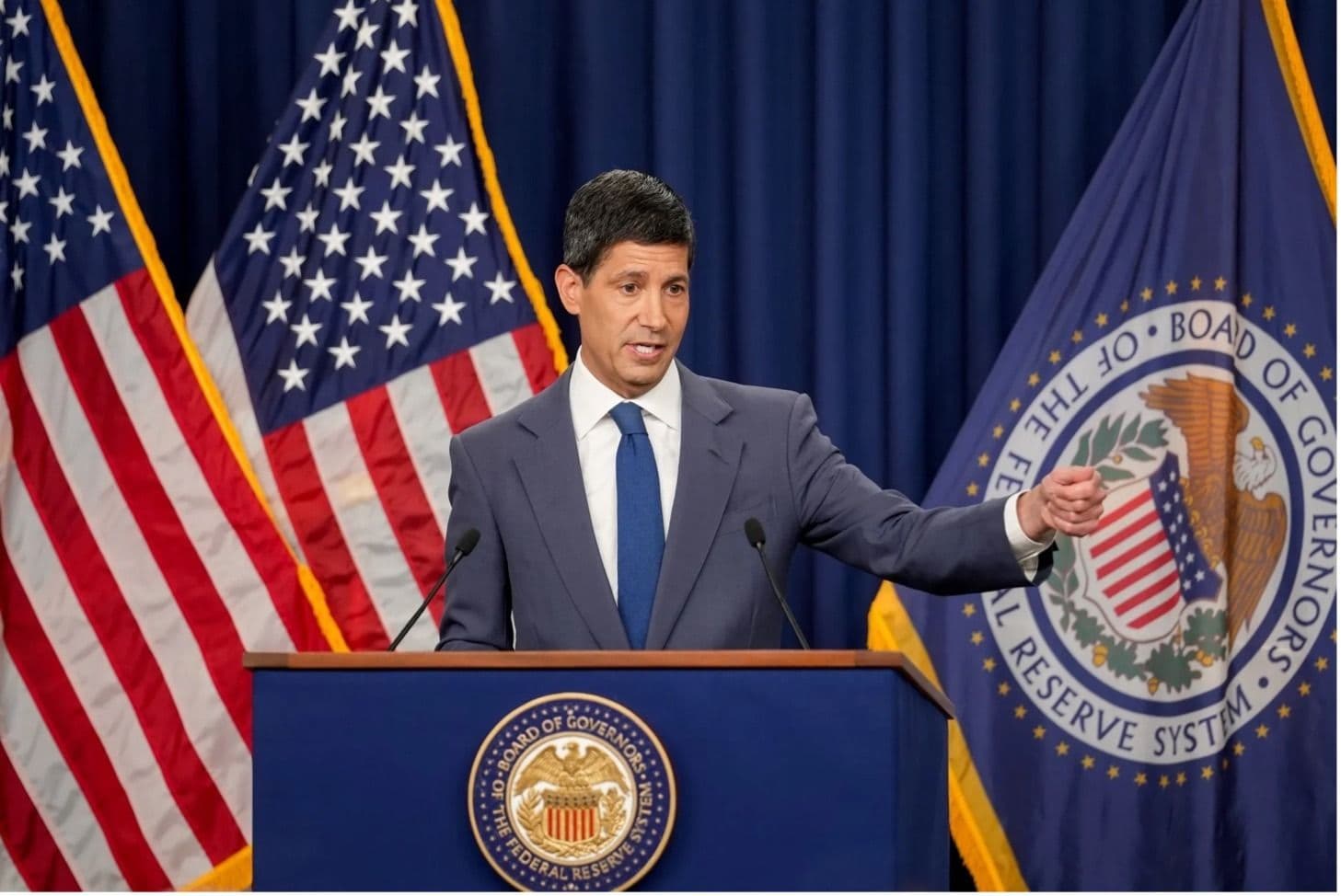
Since taking office in May 2026, newly appointed FED governor Kevin Warsh had to face a tough macroeconomic outlook. Pressures from the White House, international conflicts, surging oil prices and weak labour data have put the former Morgan Stanley banker in a very tight spot. After hiking rates by 25 basis points in September, what will the FED stance be over the upcoming months?
Described by Bank of America [1] as a convinced hawk, many analysts were surprised when, the last January, U.S. President Donald J. Trump nominated him as Jerome Powell's successor. After the continuous attacks from the White House to the FED's former governor, mainly because of his decision not to cut interest rates, many expected somebody who was more easily condescending towards dovish policies.
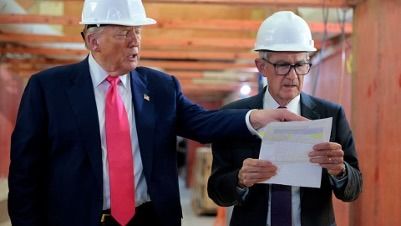
Since Liberation Day (April 2nd 2025), when stunning import tariffs for goods coming from almost anywhere in the world were announced, Trump had always been pushing for lower rates [2]. As suggested by economists close to the executive, the White House insisted on depreciating the Dollar, to make exports more competitive despite newly introduced custom barriers. However, the macroeconomic outlook hasn't allowed for similar policies.
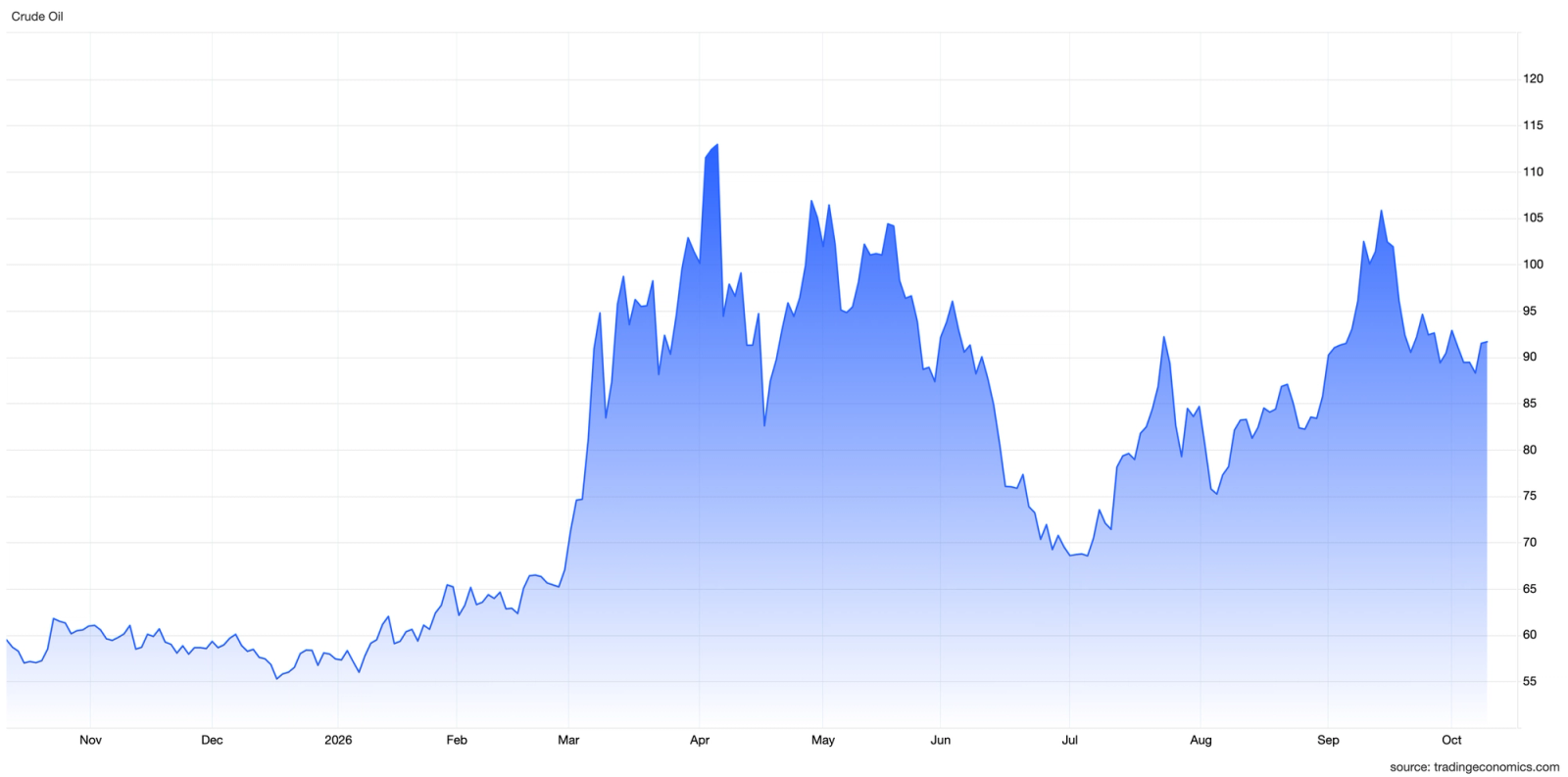
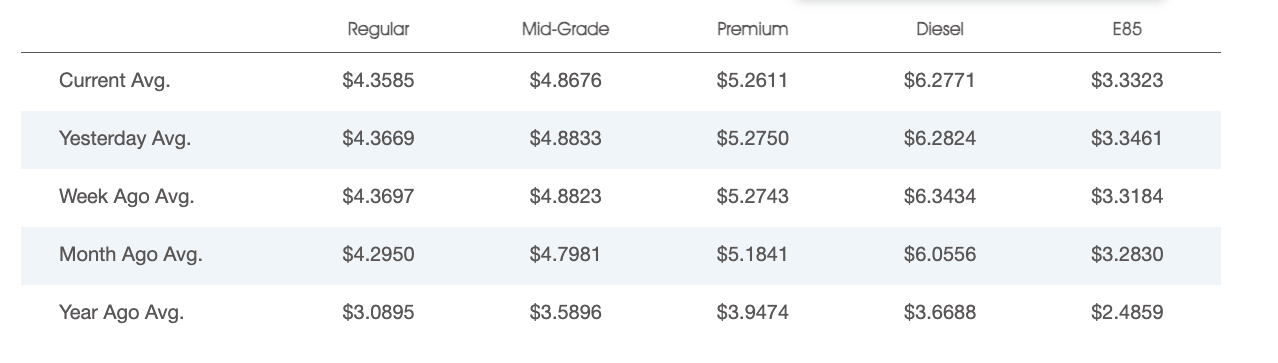
First, new tariffs backed up Powell's fears for rising CPI, advocating against lower rates [3]. Secondly, the USA-Iran war, the following closure of the strait of Hormuz, and growing Houthi pressure on the Bab-El-Mandeb bottleneck raised uncertainty and inflation risks. Oil prices spiked at over $112 per barrel, the greatest since 2022[4]. Petrol reached a national average of $4.3 a gallon [5], with peaks of over 6$ in California [6]. Diesel, the main fuel for land freight, reached $6 a gallon nation-wide. Firms are facing higher input prices, leading to greater consumer costs.
In this complex scenario, following the ECB's hike, also the Federal Reserve decided to increase interest rates by 25 bp [7]. Even if protectionists policies are encountering legislative constraints, due to the lack of congression approval, and therefore Trump's fixation for a cut is becoming less persistent, Warsh's decision must be addressed as nothing else but strong and brave.
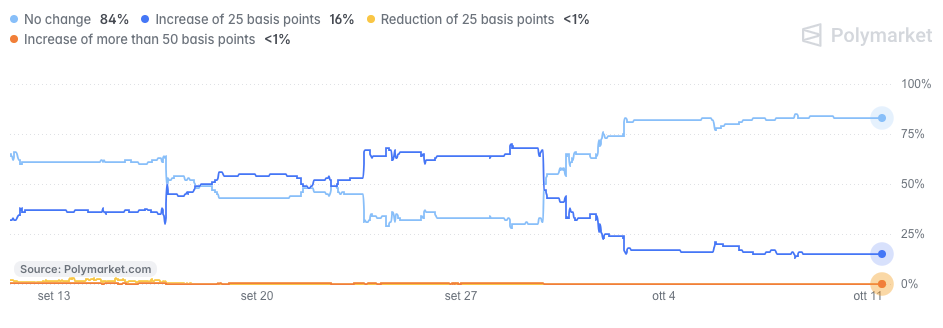
Economists are now trying to predict the next October move. Until late September, prediction markets were expecting another 25 bp hike. Polymarket's YES reached 69% [8]. However, on October 2nd, the Employment Situation News Release, a monthly report addressing trends in the job market, turned the tables.
As per the U.S. Bureau of Labor Statistics [9], in September 2026 unemployment surged to 4,2% from 4.1% in August. Nonfarm payrolls increased less than expected. Hourly wages grew by 0.1%, against 0.325% monthly expected inflation. Following the publishing of this data, markets are now expecting the FED to keep rates stable. Investors on Polymarket believe there's an 84% chance.
Considering the FED double mandate, responsible both for inflation and unemployment, unlike the ECB who is accountable only for inflation, we can confidently expect interest rates to be stable, at least in October.
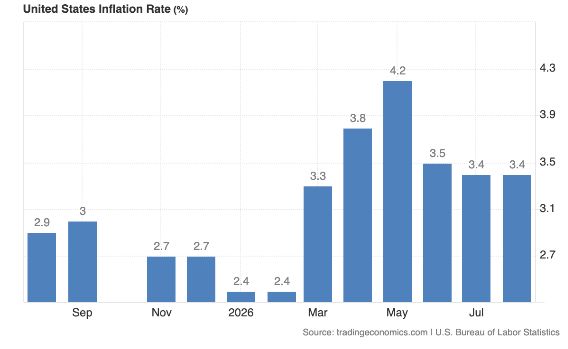
However, the next year's economic outlook isn't at all promising for Uncle Sam. With inflationary pressures persisting and a weakening job market, the US faces growing stagflation risks. The FED's room for maneuver is increasingly limited, as higher rates threaten employment while monetary easing fuels inflationary risks.
In conclusion, the state of the economy may depend less on the FED and more on the White House's ability to ease geopolitical tensions and global uncertainty. Without progress on these fronts, monetary policy alone may struggle to restore CPI stability without further weakening economic growth.
The Fed faces a difficult trade-off: weaker hiring strengthens the case for lower rates, while persistent inflation limits how quickly it can cut. Part of that tension may lie outside monetary policy. If tariffs or other government measures raise firms’ costs, prices could remain high even as demand and employment weaken. In that case, rate cuts might support the labour market without resolving the source of inflation. My view is that the next phase will depend as much on White House policy as on the Fed’s decisions: if cost pressures persist, the Fed may have little room to respond to further labour market weakness.
References
1. Investing.com. Kevin Warsh 101: is the new Fed Chair a hawk or a dove. https://www.investing.com/news/economy-news/kevin-warsh-101-is-the-new-fed-chair-a-hawk-or-a-dove-4717782. 12th October.
2. BBC. Trump faces extraordinary moment in spat with Fed chair. https://www.bbc.com/news/articles/c20zq87eng1o. 12th October.
3. CNBC. Powell sees tariffs raising inflation and says Fed will wait before further rate moves.https://www.cnbc.com/2025/04/04/powell-sees-tariffs-raising-inflation-and-says-fed-will-wait-before-further-rate-moves.html. 12th October.
4. Trading Economics. Crude Oil. https://tradingeconomics.com/commodity/crude-oil. 12th October
5. AAA. Fuel Prices. https://gasprices.aaa.com/. 12th October.
6. AAA. Fuel Prices. https://gasprices.aaa.com/?state=CA. 12th October.
7. Board of Governors of the Federal Reserve System. Federal Reserve issues FOMC statement. https://www.federalreserve.gov/newsevents/pressreleases/monetary20260916a.htm. 12th October.
8. Polymarket. Fed decision in October. https://polymarket.com/it/event/fed-decision-in-october-20260617190323537. 12th October
9. U.S. Bureau of Labor Statistics. Employment Situation News Release. https://www.bls.gov/news.release/empsit.htm. 12th October.
Disclaimer
This piece is published by Howden Research for informational and educational purposes only. It is not investment advice, a personal recommendation, or an investment recommendation within the meaning of UK market abuse rules, and it is not an offer or solicitation to buy or sell any security. Howden Research is not authorised or regulated by the Financial Conduct Authority. Views expressed are those of the author at the date of publication and are subject to change. Contributors may hold positions in the securities or instruments discussed. The value of investments can fall as well as rise. Anyone considering an investment decision should seek advice from an appropriately authorised professional.