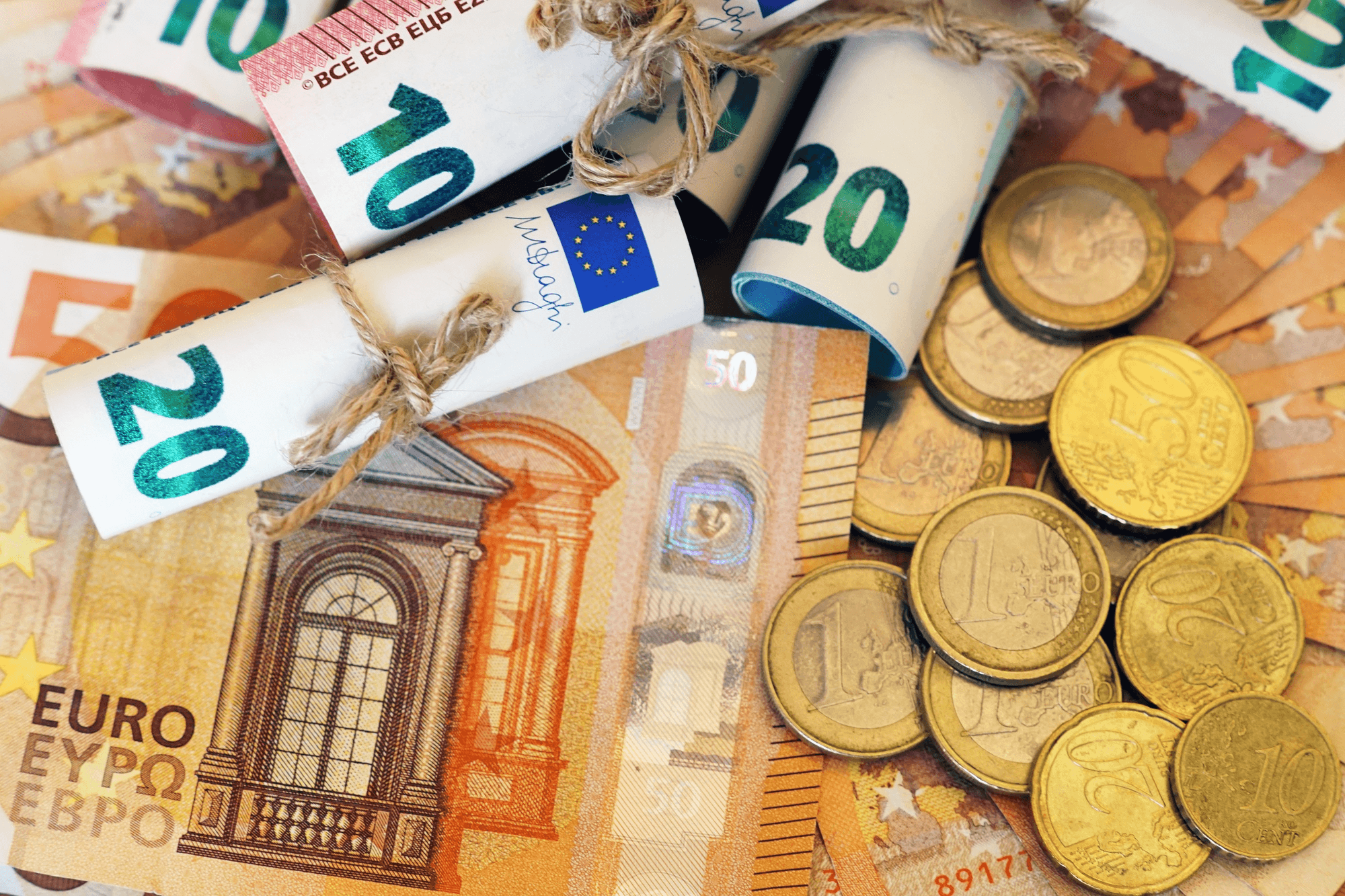
The European Union is described as one of the deepest regional integrations in the world. Since 1993, they have partaken in the Single Market, that allows the free movement of goods, services, capital and people across the member states. Then there is also the ‘Eurozone’, a group of 21 member states in the EU that share the same currency, the Euro.
Not all EU member states share the same currency, but they do partake in the Single Market, for example Denmark uses its own currency, the Danish krone, and hence isn’t a part of the Eurozone. The EU also has firm regulations that dictate not only the regulations the member states need to follow but also their non-EU trade partners. This has caused what we now describe as the ‘Brussels Effect’, basically that the EU can establish global standards and compel businesses and partners outside the Union to follow their standards too.
In summary, there is already a considerable level of integration amongst the Union members. However, there has been a recent call for deeper integration, and even a possible federalisation of the EU. This has been largely due to the current ‘trade war’ with the USA consisting of back-and-forth tariffs and the uncertain American policy regarding the war in Ukraine. Key figures such as Emmanuel Macron, the President of France and Mario Draghi, former Italian premier and ECB’s chief have called for a deeper more unified structure for the EU especially on key matters such as migration and defence.
One of the most important factors of a federalisation or a deeper integration of the EU would be the possible formation of a mutual debt market and a capital market union. EU nations taking out debt together and backing bonds making them more attractive.
European capital market union and debt mutualisation
Possibilities and constraints
The idea of a unified debt isn’t something entirely new to the EU. NextGenerationEU worth 750 billion euros, is an example of this, however it took a lot of pushing for the Northern frugal nations to agree to this. Which is just an example of how fragmented the EU markets are, and that insecurity doesn’t make the EU currently that attractive. This, however, is not an example of a proper safe asset in the form of bonds backed by the EU.
The EU is, however, looking to finance common priorities like defence and energy through supranational EU bonds. It is already a possibility for the EU to establish a debt mutualisation and capital union programme that could quite possibly create a new ultra safe asset for investors. However, this is only possible if it is treated as a sovereign bond, which it currently isn’t due to the reality of the EU and a supranational bond by itself won’t be enough to establish Euro as a safe asset because of its nature and the market fragmentation inside the EU.
In case the EU mutualised its debt and formed unified capital markets, it would form massive liquid assets that would be attractive to global investors and establish the Euro as a safe asset.
The likelihood of this mutualisation depends heavily on the Northern frugal nations and the push by countries such as France, Italy and Spain that have higher debt-to-GDP ratios than their northern counterparts and are looking to borrow cheaply. On the other hand, the frugal nations such as Germany and Denmark worry about the possibility of fiscal irresponsibility by the other nations.
Possible Impacts
EU’s debt is about 82.9% of its GDP, whereas the US debt makes 125.8% of its GDP (the total amount hitting $40 trillion recently). If Europe unified its debt, it would merge the best of both worlds: the fiscal safety of a lower debt-to-GDP ratio with the massive, unified scale of the U.S. Treasury market.
In the case of an EU debt mutualisation and capital market union, a massive new market would open in the form of unified Eurobonds. This will be highly attractive to investors due to the possibility of massive liquid assets and the collective backing of the EU nations giving it a higher credit rating than the current fragmented EU bonds. This will have tremendous effects.
- Emerging markets might find it more expensive to borrow money due to the new competition in the form of the EU. As a new safe asset, it will be more attractive to investors rather than the ‘volatile and shaky’ EMs. Investors are looking for assets that are safe to invest in, in the case of many EMs, it is always a risk. If the Eurobonds became that safe assets to rival the US treasury, it is very likely that they would reallocate their investments in the EMs to the EU.
- There will be a global power shift with a new power rising in the form of the EU. They will be competing with other giants, namely USA and China. Europe has recently been losing global significance, but this could be her comeback.
- In the case of a global crisis, the US dollar will appreciate less rapidly due to capital flight not targeting only the US Treasuries but also flowing through Euro denominated areas. Providing a cushioning for EMs that currently rely on foreign currency loans, that are mostly in US dollars. EMs usually see a hit to their currencies when a crisis occurs. The USD appreciates in value, making their debt more expensive. To counter that, local banks increase interest rates that can as a result crush local business. If the Euro is a safe asset in a similar vein to the USD, the Euro can provide that cushioning by absorbing some of the capital flight.
- Businesses and countries in the EU will find it cheaper and easier to borrow money.
- Countries will be less reliant on the US dollar (we already see some nations moving away from borrowing money in the USD), which can also result in the US itself not being safe from its own high debt-to-GDP ratio as the US is protected due to its value as the global reserve currency and the US Treasury’s high liquid assets.
Greater EU-wide capital market integration would foster a larger and more liquid European financial market through the creation of a common safe asset. Increased demand for such an asset could, in turn, strengthen the international role of the Euro and enhance Europe’s financial autonomy.
The reliance on the US dollar as a global safe asset is closely linked to its status as the world’s primary reserve currency and the depth and liquidity of the US Treasury market. The emergence of a common EU safe asset could strengthen the international role of the Euro by providing global investors with a deeper pool of highly liquid, Euro-denominated assets. This could increase the use of the Euro in international trade and financial markets, thereby reducing reliance on the US dollar.
Eurobonds would be a safe asset rivalling that of the US, which means that people looking to diversify their portfolio, or the current insecurities regarding the USA’s own debt-to-GDP ratio, would be likely to move towards Euro denominated assets. There is already a demand for an alternate to the USD, the Euro might be able to grab onto that opportunity.
Conclusions
There are a lot of hurdles for the EU to cross before they can establish a safe asset in the form of the Eurobond. We talked about a possible federalisation or a deeper integration of the EU, but the truth is that it won’t be possible soon as the countries are too fragmented in their policies and priorities.
As mentioned before too, the Northern nations such as Germany and Denmark worry about fiscal irresponsibility by the other nations. It is also a question of politics; most EU member states do not want to yield more control to the EU and aren’t really looking for any sort of deeper integrations due to a lack of political legitimacy for this issue (for most nations the idea of sovereignty is very important, and giving more power to the EU means giving away part, if not the whole of their sovereignty). Most citizens aren’t interested in an EU federalisation either.
The EU in its current form is basically 27 different markets that results in a level of fragmentation that makes it incredibly difficult for any sort of safe asset to emerge. There is however a lot of possibilities in case an integration occurs due to the collective size of the EU member states’ economies.
What is possible however, is deeper cooperation between the nations over raising money for collective priorities such as defence and energy. This doesn’t automatically translate into the Eurobond haven we talked about, for that to happen the EU will need to make more dramatic steps such as deeper capital market integration and the willingness to take on mutual debt. It is still a start though.
On the backdrop of rising tensions with the USA and the call from within to strengthen the EU as a global power capable of standing on its own, we might see more leaders pushing for deeper integration soon. If it will come to fruition is heavily reliant on how they present the benefits to the biggest economies in the Union. There is hope with leaders such as Macron, Draghi (his report has been particularly enlightening on deeper integration and its benefits for the EU) and the ECB President Christine Lagarde. If the EU is successful in establishing a safe asset, it would mean that the global power shifts are occurring and we have a new power emerging in the multipolar world between the US and China. The EU will be able to practice more autonomy, specifically financially.
References
- Olivier Blanchard, Ángel Ubide / Peterson Institute for International Economics. Eurobonds: Despite objections, they are more needed than ever. https://www.piie.com/blogs/realtime-economics/2026/eurobonds-despite-objections-they-are-more-needed-ever. [14.09.26]
- Lorenzo Bini Smaghi / Institute for European Policy Making @ Bocconi University. The purpose of Eurobonds. https://iep.unibocconi.eu/purpose-eurobonds. [13.09.26]
- Andreas Eisl, Mattia Tomay / Jaques Delores Institute. EUROPEAN DEBT MUTUALISATION. https://institutdelors.eu/content/uploads/2025/04/PP255_European-debt-mutualisation_Eisl_EN.pdf.
- Ludovic Subran, Patrick Krizan, Bernhard Hirsch. / Allianz. Eurobonds – A window of opportunity for a strategic necessity. https://www.allianz-trade.com/en_global/news-insights/economic-insights/Eurobonds-window-opportunity-strategic-necessity.html.
- What is the capital markets union?. https://finance.ec.europa.eu/financial-markets/financial-markets-policy/capital-markets-union/what-capital-markets-union_en
- Martina Jančoková, Enrico Mallucci, Martino Ricci and Luca Tondo / European Central Bank. The euro as a safe-haven currency amid geopolitical tensions and policy uncertainty. https://www.ecb.europa.eu/press/other-publications/ire/focus/html/ecb.irebox202606_01~27015b32ba.en.html
- Sebnem Kalemli-Ozcan Filiz Unsal / VOX EU CEPR. Global shocks are back: Emerging markets holding up. https://cepr.org/voxeu/columns/global-shocks-are-back-emerging-markets-holding
- CFR Staff - CFR. Currency Crises in Emerging Markets. https://www.cfr.org/backgrounders/currency-crises-emerging-markets
- EUROSTAT - EUROPEAN UNION. Government debt at 88.9% of GDP in euro area. https://ec.europa.eu/eurostat/web/products-euro-indicators/w/2-21072026-ap
- Hung Tran – Atlantic Council. The search for safe assets. https://www.atlanticcouncil.org/blogs/econographics/the-search-for-safe-assets/
- Doloresz Katanich – Euronews. Five charts explaining America’s $40 trillion debt. https://www.euronews.com/business/2026/08/22/five-charts-explaining-americas-40-trillion-debt
- Antje Schiffler – Morningstar. What Are EU Bonds and Can They Become a Safe-Haven Powerhouse?. https://global.morningstar.com/en-eu/bonds/what-are-eu-bonds-can-they-become-safe-haven-powerhouse
- Giovanni Bonfanti, Luis Garicano Luis Garicano – bruegel. Do financial markets consider European common debt a safe asset?. https://www.bruegel.org/blog-post/do-financial-markets-consider-european-common-debt-safe-asset
- Giovanni Bonfanti – VOX EU CEPR. A European safe asset will require bolder steps. https://cepr.org/voxeu/columns/european-safe-asset-will-require-bolder-steps
- Jan Strupczewski – Reuters. EU must reform, consolidate, use joint debt to cope with spending needs, IMF says. https://www.reuters.com/business/finance/eu-must-reform-consolidate-use-joint-debt-cope-with-spending-needs-imf-says-2026-05-23/
Disclaimer
This piece is published by Howden Research for informational and educational purposes only. It is not investment advice, a personal recommendation, or an investment recommendation within the meaning of UK market abuse rules, and it is not an offer or solicitation to buy or sell any security. Howden Research is not authorised or regulated by the Financial Conduct Authority. Views expressed are those of the author at the date of publication and are subject to change. Contributors may hold positions in the securities or instruments discussed. The value of investments can fall as well as rise. Anyone considering an investment decision should seek advice from an appropriately authorised professional.